
Casino Legends: A Trip to Exotic Las Vegas, Monaco, and Macao Casinos

A few places in the world carry a reputation that outlasts trends, recessions, and changing tastes. Las Vegas, Monaco, and Macao are three of them — each shaped by a different culture, a different era, and a different idea of what gambling is supposed to feel like. If you’ve ever been curious about what sets these legendary casinos apart from everything else, this is a good place to start.
Table of content
Key Takeaways
- Las Vegas, Monaco, and Macao each represent a different style of legendary casino culture.
- Las Vegas is known for large-scale entertainment, themed resorts, and 24/7 casino action.
- Monaco’s Casino de Monte-Carlo stands out for its history, luxury, and exclusivity.
- Macao became the world’s biggest casino market thanks to baccarat and high-stakes VIP play.
- Each destination offers a different experience: Vegas for entertainment, Monaco for heritage, and Macao for scale.
Las Vegas – The City That Reinvented Legendary Casinos
Few places have transformed themselves as completely, or as deliberately, as Las Vegas. What started as a modest railroad stop in the Nevada desert became, over a few decades, one of the most visited cities on Earth.
Built on Big Dreams (and Bigger Risk)
The opening of the Flamingo Hotel in 1946, famously tied to mobster Bugsy Siegel, is often cited as the moment Las Vegas stopped being a stopover and became a destination. The story goes that Siegel poured millions into the project, demanded only the finest materials, and was murdered before he could see it succeed. Whether that version is entirely accurate is debatable, but it captures something true about early Vegas — it was built by people willing to gamble everything.
As David G. Schwartz, Director of the Center for Gaming Research at the University of Nevada, Las Vegas and author of Roll the Bones: The History of Gambling, has noted, Las Vegas succeeded not simply because gambling was legal there, but because the city committed to a total entertainment experience — one unlike anything America had seen before.
What Makes Vegas Unlike Anywhere Else
The scale is difficult to describe until you’ve stood on the Strip yourself. Some resorts contain over 3,000 rooms, entire shopping streets, and multiple casino floors that seem to have no visible edges.
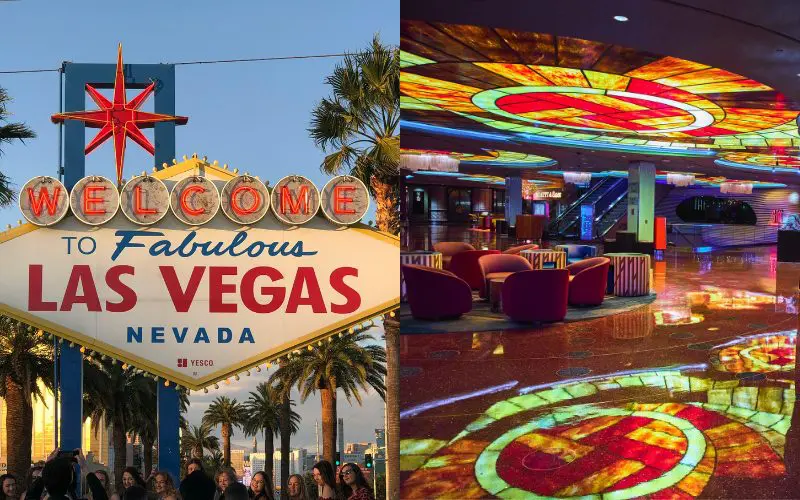
A few things stand out when you spend time there:
- There are no clocks inside most casinos, and natural light is kept to a minimum — time tends to disappear
- The variety of games is enormous, from penny slots to high-stakes poker rooms
- Entertainment is built into the architecture — fountains, acrobatic shows, themed hotels, and concerts are part of the same package
It’s worth noting that Vegas hasn’t been without its challenges in recent years. Some analysts have questioned whether the city’s growth model is sustainable, especially as newer destinations like Macao and Singapore have emerged. Still, it remains the benchmark against which every other casino destination is measured.
Monaco – Where Legendary Casino Heritage Meets Old Money
Monaco may be the smallest country in the world, but it carries more gambling prestige per square kilometer than almost anywhere else. The atmosphere here is something else entirely.
The Casino de Monte-Carlo
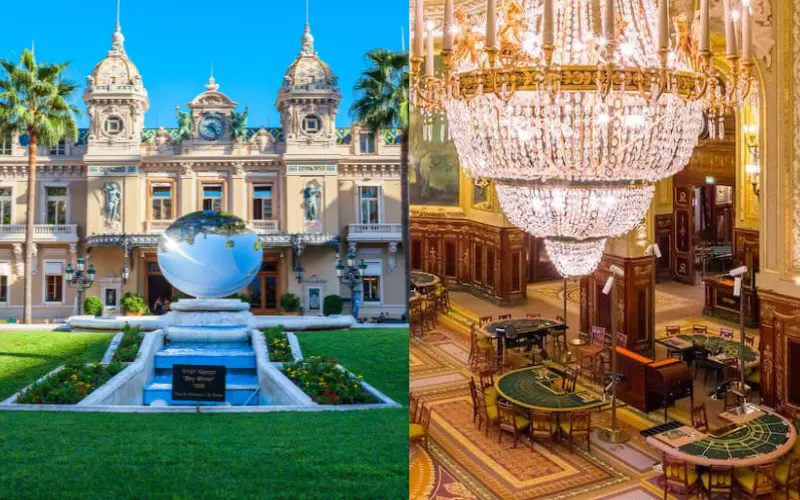
Opened in 1863, the Casino de Monte-Carlo wasn’t built to entertain tourists — it was built to rescue a ruling family from financial collapse. The Grimaldis, who governed Monaco, were close to bankruptcy when they commissioned the project, and the gamble paid off in a way that continues to define the principality today.
The architecture alone is worth the visit. Belle Époque columns, painted ceilings, chandeliers, and a terrace overlooking the Mediterranean make it feel less like a casino and more like a nineteenth-century palace that happens to have roulette tables.
A Casino That Saved a Country
One detail that tends to surprise visitors is that citizens of Monaco are legally banned from gambling in their own casino. The rule was introduced to protect local residents from losing their savings, which speaks to how the casino was always conceived as a destination for outsiders rather than a community amenity.
The broader cultural picture is hard to ignore. The Grand Prix circuit runs past the casino’s doorstep. Luxury yachts fill the harbour. The casino is just one element in a larger ecosystem of wealth and display. If Las Vegas is democratic in its appeal — everyone welcome, everything loud — Monaco is the opposite. The casino dress code alone signals that.
Macao – Asia’s Answer to the World’s Legendary Casinos
Macao is, in some respects, the most fascinating case of the three. It overtook Las Vegas in total gaming revenue back in 2006, and at its peak was generating several times more than the Nevada city. That kind of growth doesn’t happen by accident.
From Portuguese Colony to Gaming Powerhouse
Macao’s gambling history stretches back to the 1850s, when the Portuguese colonial government first legalized it as a revenue stream. For more than a century, a single company held the monopoly, keeping the industry relatively contained. That changed dramatically in 2002 when the government opened the market to outside operators.
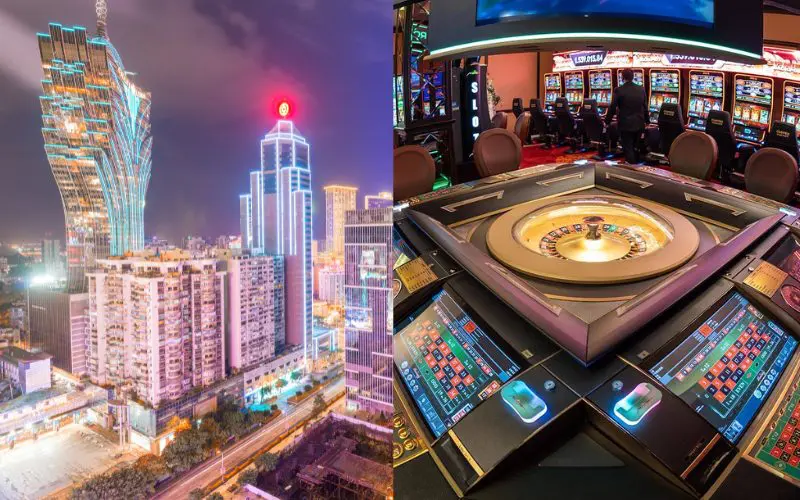
Within a decade, massive resort complexes appeared on reclaimed land along what became known as the Cotai Strip — designed to rival, and in several cases physically outsize, anything in Las Vegas.
Scale, Speed, and Baccarat
The dominant game in Macao is baccarat, which accounts for the vast majority of casino revenue. This is largely shaped by Chinese cultural preferences — baccarat is seen as a game of instinct and fate, rather than pure chance. The VIP room culture, where high-rollers are courted with extraordinary hospitality, is unlike anything in Monaco or Vegas.
Macao has been actively trying to diversify in recent years, investing heavily in non-gaming entertainment to reduce its dependency on casino revenue alone. Whether that shift will redefine the destination or simply add layers to it, remains to be seen.
Las Vegas, Monaco and Macao – Three Different Faces of the Casino World
Las Vegas, Monaco, and Macao each offer a unique casino experience shaped by culture, history, and style: Las Vegas dazzles with 24/7 entertainment and themed resorts; Monaco exudes heritage, luxury, and exclusivity at the Casino de Monte-Carlo; and Macao dominates with massive scale, high-stakes baccarat, and VIP-focused gaming.
Here’s a rough sense of how the three compare:
| Las Vegas Strip | Casino de Monte-Carlo | Macao (Cotai Strip) | |
|---|---|---|---|
Atmosphere | Theatrical, loud, 24-hour | Formal, historic, restrained | Lavish, fast-paced, VIP-driven |
Primary audience | International tourists | Wealthy European visitors | Mainland Chinese guests |
Peak casino revenue | ~$7.6 billion (2022) | Boutique scale | ~$36.5 billion (2019) |
Famous for | Entertainment + gaming | Heritage + exclusivity | Volume + high-stakes culture |
Together, these legendary destinations highlight how different approaches to gambling—entertainment, prestige, and volume—create unforgettable experiences for players worldwide.
However, you don’t have to travel that far; you can find the atmosphere of a real casino at online casinos.
FAQs about Casino Legends
Which of these three destinations is best for first-time visitors?
Las Vegas is likely the most accessible, given its variety of entertainment, price ranges, and range of gaming options.
Can anyone enter the Casino de Monte-Carlo?
Yes, but you must be 18 or older, carry a valid ID, and dress appropriately. Monaco citizens cannot gamble there.
Why is Macao's casino revenue so much higher than Las Vegas?
Macao draws from a vastly larger population base, particularly mainland China, and its VIP culture drives enormous single-session spending.
What is the most iconic casino in Las Vegas?
The Bellagio is widely considered the most recognizable, though opinions genuinely differ depending on what you’re after.
Is Monaco's casino still worth visiting if you don't gamble?
Absolutely. The building itself is historically significant, and the surrounding area — the harbour, the Grand Prix circuit, the gardens — makes it a compelling destination on its own terms.

 English
  Български
  Deutsch
  Français
  Italiano
  Magyar
  Português
  Русский
  Română
  Slovenský
  Svenska
  Türkçe
  Українська